IntroductionThe Ultimate Advanced Home Workout Plan:
Many people believe that advanced fitness requires expensive gym memberships, heavy machines, and specialized equipment. While gyms certainly provide variety, they are not the only path to achieving elite levels of fitness. With the right strategy, discipline, and progressive training methods, advanced athletes can continue building strength, endurance, muscle, and athletic performance entirely from home.The Ultimate Advanced Home Workout Plan:
Home workouts have evolved dramatically in recent years. By combining bodyweight movements, resistance bands, dumbbells, kettlebells, or even household items, athletes can challenge every muscle group while improving mobility and cardiovascular fitness. The key lies not in the amount of equipment available but in intelligent programming, consistency, and progressive overload.The Ultimate Advanced Home Workout Plan:
This comprehensive guide presents an advanced home workout plan designed for experienced athletes who already possess a solid fitness foundation. The program emphasizes strength, muscular endurance, explosive power, flexibility, and recovery while ensuring balanced development across the entire body.The Ultimate Advanced Home Workout Plan:
Why Advanced Athletes Should Train at HomeThe Ultimate Advanced Home Workout Plan:Farming – The Backbone of Human Civilization and the Economy
A focus keyword (also called a primary keyword) is the main word or phrase that your article or webpage is about. It is the search term you want people to type into a search engine to find your content.
Example
If your article is about exercising at home, your focus keyword could be:
Focus Keyword: Home Workout
Other examples:
- Weight Loss
- Fitness Tips
- Home Exercise
- Muscle Building
- Healthy Diet
- Yoga for Beginners
Why is a focus keyword important?
Using a focus keyword helps search engines understand your content and can improve your chances of appearing in relevant search results.
Where should you use it?
Include your focus keyword naturally in:
- The article title
- The first paragraph
- Headings (H2/H3)
- The article body
- The meta title and meta description
- The URL (if possible)
- The image alt text
For example, if your article is titled “The Ultimate Home Workout Plan”, then Home Workout is the focus keyword.
Training at home offers several advantages beyond convenience.The Ultimate Advanced Home Workout Plan:
First, it saves commuting time, allowing athletes to dedicate more energy to recovery and performance.The Ultimate Advanced Home Workout Plan:
Second, home workouts encourage creativity by using bodyweight progressions, tempo training, unilateral exercises, and explosive movements instead of relying solely on machines.The Ultimate Advanced Home Workout Plan:
Third, athletes can train according to their own schedules without waiting for equipment or dealing with crowded gyms.
Finally, home training develops greater body control, stability, coordination, and functional strength because many movements require greater balance and core activation.The Ultimate Advanced Home Workout Plan:
Positive Effects
- Improved cardiovascular fitness
- Increased muscle strength and endurance
- Better flexibility and mobility
- Weight loss or healthier body composition
- Reduced stress and improved mood
- Better sleep quality
- Increased energy levels
- Improved posture and balance
Possible Negative Side Effects
- Muscle soreness (DOMS): Common after new or intense workouts.
- Fatigue: Overtraining without enough rest can leave you feeling exhausted.
- Injury risk: Poor form can lead to sprains, strains, or joint pain.
- Joint discomfort: High-impact exercises may aggravate knees, ankles, or wrists if done incorrectly.
- Dehydration: Not drinking enough water during exercise can cause headaches, dizziness, and reduced performance.
- Burnout: Exercising too often without recovery can reduce motivation and slow progress.
- Plateau: Repeating the same routine for too long may stop improvements.
How to Prevent Negative Side EffectsThe Ultimate Advanced Home Workout Plan:
- Warm up for 5–10 minutes before exercising.
- Use proper technique for every exercise.
- Increase intensity gradually.
- Stay hydrated.
- Eat a balanced diet with enough protein and carbohydrates.
- Sleep 7–9 hours each night.
- Take at least one or two rest or active recovery days each week.
When performed correctly with proper recovery, home workouts are generally safe and highly beneficial, and most negative side effects can be avoided.
Before beginning any advanced routine, athletes should understand several key training principlesThe Ultimate Advanced Home Workout Plan:.
Progressive Overload
Continue increasing difficulty by adding repetitions, slowing movement tempo, increasing resistance, reducing rest periods, or performing more challenging exercise variations.The Ultimate Advanced Home Workout Plan:
Training Intensity
Advanced workouts should challenge muscles close to fatigue while maintaining perfect form.The Ultimate Advanced Home Workout Plan:
RecoveryThe Ultimate Advanced Home Workout Plan:
Recovery is just as important as training. Aim for 7–9 hours of sleep, proper hydration, balanced nutrition, and scheduled rest days.
Consistency
Long-term success comes from consistently following a structured program rather than performing random workouts.The Ultimate Advanced Home Workout Plan:
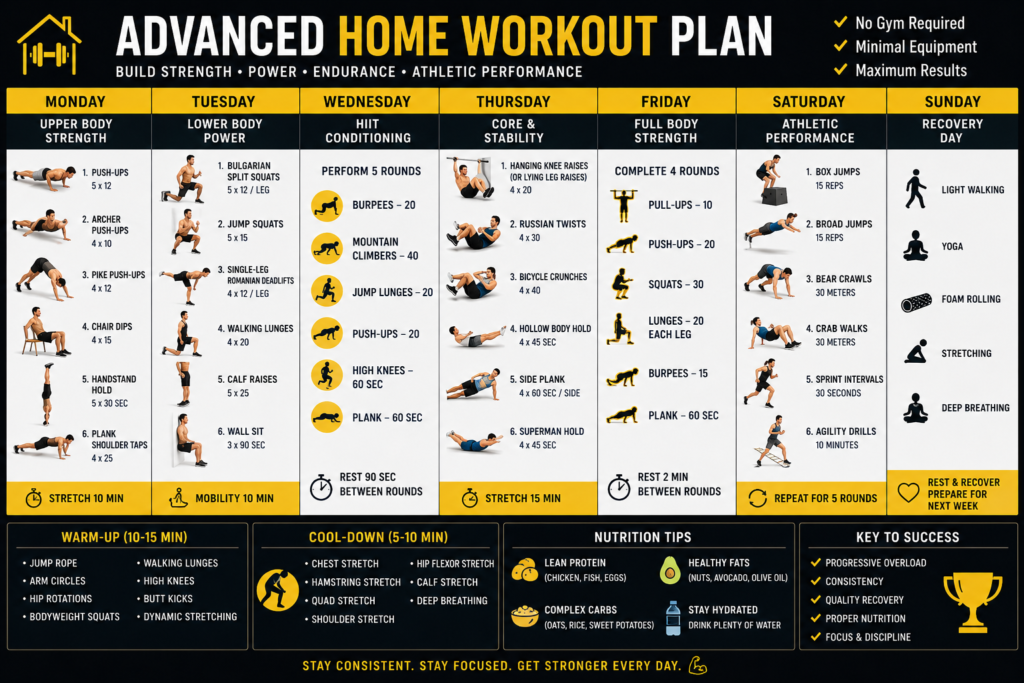
Table of Contents
Weekly Workout ScheduleThe Ultimate Advanced Home Workout Plan:
Monday – Upper Body Strength
- Push-ups (weighted or decline) – 5 sets × 12 reps
- Archer Push-ups – 4 × 10
- Pike Push-ups – 4 × 12
- Chair Dips – 4 × 15
- Handstand Hold – 5 × 30 seconds
- Plank Shoulder Taps – 4 × 25
Finish with 10 minutes of stretching.
Tuesday – Lower Body Power
- Bulgarian Split Squats – 5 × 12 each leg
- Jump Squats – 5 × 15
- Single-Leg Romanian Deadlifts – 4 × 12
- Walking Lunges – 4 × 20
- Calf Raises – 5 × 25
- Wall Sit – 3 × 90 seconds
Finish with mobility exercises for hips and ankles.
Wednesday – HIIT ConditioningThe Ultimate Advanced Home Workout Plan:
Perform five rounds:
- Burpees – 20
- Mountain Climbers – 40
- Jump Lunges – 20
- Push-ups – 20
- High Knees – 60 seconds
- Plank – 60 seconds
Rest 90 seconds between rounds.
Thursday – Core and Stability
- Hanging Knee Raises (or lying leg raises) – 4 × 20
- Russian Twists – 4 × 30
- Bicycle Crunches – 4 × 40
- Hollow Body Hold – 4 × 45 seconds
- Side Plank – 4 × 60 seconds
- Superman Hold – 4 × 45 seconds
Complete 15 minutes of stretching afterward.The Ultimate Advanced Home Workout Plan:
Friday – Full Body StrengthThe Ultimate Advanced Home Workout Plan:
Complete four rounds:
- Pull-ups (if available) – 10
- Push-ups – 20
- Squats – 30
- Lunges – 20 each leg
- Burpees – 15
- Plank – 60 seconds
Rest two minutes between rounds.
Saturday – Athletic Performance
Perform the following circuit:The Ultimate Advanced Home Workout Plan:
- Box Jumps – 15
- Broad Jumps – 15
- Bear Crawls – 30 meters
- Crab Walks – 30 meters
- Sprint Intervals – 30 seconds
- Agility Drills – 10 minutes
Repeat for five rounds.
Sunday – Recovery DayThe Ultimate Advanced Home Workout Plan:
Recovery should include:
- Light walking
- Yoga
- Foam rolling
- Stretching
- Deep breathing exercises
Recovery prepares the body for another productive training week.
Warm-Up Routine
Every workout should begin with a proper warm-up lasting approximately 10–15 minutes.The Ultimate Advanced Home Workout Plan:
Include:
- Jump rope
- Arm circles
- Hip rotations
- Bodyweight squats
- Walking lunges
- High knees
- Butt kicks
- Dynamic stretching
A quality warm-up increases circulation, improves mobility, and reduces injury risk.The Ultimate Advanced Home Workout Plan:
Cool-Down Routine
Finish every workout with five to ten minutes of cooling down.
Focus on stretching the:
- Chest
- Back
- Hamstrings
- Quadriceps
- Hip flexors
- Glutes
- Shoulders
- Calves
Deep breathing helps lower heart rate and speeds recovery.https://digifletcher.com/
Nutrition for Advanced PerformanceThe Ultimate Advanced Home Workout Plan:
Training alone cannot maximize performance without proper nutrition.
Protein
Consume lean protein sources such as chicken, fish, eggs, Greek yogurt, beans, tofu, and lentils to support muscle repair.
Complex Carbohydrates
Choose oats, brown rice, sweet potatoes, whole grains, and fruits to fuel high-intensity workouts.
Healthy Fats
Include nuts, seeds, avocados, olive oil, and fatty fish for hormone production and recovery.The Ultimate Advanced Home Workout Plan:
Hydration
Drink plenty of water throughout the day and replenish fluids after intense training sessions.
Recovery StrategiesThe Ultimate Advanced Home Workout Plan:
Elite performance depends on quality recovery.
Important recovery habits include:
- Sleep at least 7–9 hours nightly.
- Stretch daily.
- Stay hydrated.
- Eat balanced meals.
- Take scheduled recovery days.
- Manage stress through breathing exercises or meditation.
Common Mistakes to Avoid
Even experienced athletes make mistakes that limit progress.The Ultimate Advanced Home Workout Plan:
Avoid:
- Skipping warm-ups
- Poor exercise technique
- Training through pain
- Ignoring recovery
- Inconsistent programming
- Insufficient protein intake
- Poor sleep habits
- Overtraining
Correcting these mistakes leads to sustainable improvement.
Tracking ProgressThe Ultimate Advanced Home Workout Plan:
Measure progress every four weeks by recording:
- Maximum push-ups
- Maximum pull-ups
- Squat repetitions
- Plank duration
- Sprint times
- Body measurements
- Body weight
- Progress photos
Tracking helps identify strengths, weaknesses, and areas requiring adjustment.
Staying MotivatedThe Ultimate Advanced Home Workout Plan:
Maintaining motivation over the long term requires setting clear goals and celebrating milestones. Keep a workout journal, challenge yourself with new exercise variations, and periodically test your fitness to see measurable improvements. Training with a partner virtually or sharing progress with a community can also help maintain accountability.
Equipment That Can Enhance Home TrainingThe best digital marketing career opportunities in 2026, these are among the strongest options:
Although this program can be performed with minimal equipment, a few additions can significantly increase exercise variety and resistance:
- Resistance bands
- Adjustable dumbbells
- Kettlebell
- Pull-up bar
- Jump rope
- Suspension trainer
- Yoga mat
- Foam roller
These tools expand training options while still requiring far less space and cost than a full gym.
Final Thoughts
Home workouts are no longer just an alternative to gym training—they are a highly effective way for advanced athletes to build strength, increase endurance, improve athletic performance, and maintain exceptional fitness. Success comes from following a structured program, applying progressive overload, prioritizing recovery, and fueling the body with proper nutrition.
By committing to this advanced home workout plan and remaining consistent week after week, athletes can continue achieving impressive results without ever stepping into a commercial gym. Fitness is ultimately determined by dedication, discipline, and smart training—not by the location where you exercise. Stay focused, challenge yourself responsibly, and remember that every workout is another step toward becoming stronger, faster, healthier, and more resilient.
Positive Effects
- Improved cardiovascular fitness
- Increased muscle strength and endurance
- Better flexibility and mobility
- Weight loss or healthier body composition
- Reduced stress and improved mood
- Better sleep quality
- Increased energy levels
- Improved posture and balance
Possible Negative Side Effects
- Muscle soreness (DOMS): Common after new or intense workouts.
- Fatigue: Overtraining without enough rest can leave you feeling exhausted.
- Injury risk: Poor form can lead to sprains, strains, or joint pain.
- Joint discomfort: High-impact exercises may aggravate knees, ankles, or wrists if done incorrectly.
- Dehydration: Not drinking enough water during exercise can cause headaches, dizziness, and reduced performance.
- Burnout: Exercising too often without recovery can reduce motivation and slow progress.
- Plateau: Repeating the same routine for too long may stop improvements.
How to Prevent Negative Side Effects
- Warm up for 5–10 minutes before exercising.
- Use proper technique for every exercise.
- Increase intensity gradually.
- Stay hydrated.
- Eat a balanced diet with enough protein and carbohydrates.
- Sleep 7–9 hours each night.
- Take at least one or two rest or active recovery days each week.
When performed correctly with proper recovery, home workouts are generally safe and highly beneficial, and most negative side effects can be avoided.
A healthy diet supports your workouts, recovery, and overall health. Here’s a balanced daily diet plan that works well for most active adults.
Breakfast (7:00–8:00 AM)
- 2–3 boiled or scrambled eggs (or tofu/paneer for a vegetarian option)
- 1 bowl of oatmeal or 2 whole-wheat toast slices
- 1 banana or an apple
- 1 glass of milk or unsweetened yogurt
Mid-Morning Snack (10:00–11:00 AM)
- A handful of almonds, walnuts, or peanuts
- 1 seasonal fruit
Lunch (1:00–2:00 PM)
- Grilled chicken, fish, lentils, or beans
- 1–2 whole-wheat rotis or 1 cup brown rice
- Mixed vegetables
- Salad (cucumber, tomato, carrots)
- 1 bowl of curd (yogurt)
Pre-Workout Snack (30–60 Minutes Before Exercise)
- 1 banana
- Peanut butter on whole-wheat bread, or a handful of dates
Post-Workout Meal
- Protein-rich food such as eggs, chicken, fish, paneer, tofu, or Greek yogurt
- Sweet potato, rice, or fruit to replenish energy
- Plenty of water
Dinner (7:00–8:30 PM)
- Lean protein (chicken, fish, tofu, paneer, or lentils)
- Steamed vegetables
- 1–2 whole-wheat rotis or a small serving of brown rice
Hydration
- Drink 2–3 liters of water throughout the day.
- Increase your fluid intake if you exercise intensely or in hot weather.
Foods to Include
- Lean proteins: eggs, chicken, fish, lentils, beans
- Whole grains: oats, brown rice, whole-wheat bread
- Healthy fats: nuts, seeds, avocados
- Fruits and vegetables: aim for a variety of colors each day
- Dairy or fortified alternatives: milk, yogurt, paneer
Foods to Limit
- Sugary drinks
- Fried and highly processed foods
- Excess sweets and desserts
- Excessive alcohol
Eating a balanced diet, staying hydrated, and matching your food intake to your activity level will help improve energy, recovery, and workout performance. If you have a specific goal such as weight loss, muscle gain, or managing a medical condition, your calorie and nutrient needs may differ.
If you mean “What are the side effects of not eating food?”, here are the main effects:
Short-term (within hours to a day)
- Hunger
- Low energy and fatigue
- Headache
- Dizziness or lightheadedness
- Difficulty concentrating
- Irritability or mood changes
- Shakiness due to low blood sugar
Longer-term (days or more)
- Muscle loss as the body uses muscle for energy
- Weak immune system
- Weight loss
- Vitamin and mineral deficiencies
- Hair loss and dry skin
- Weakness and reduced physical performance
- Slower wound healing
Severe or prolonged lack of food
- Malnutrition
- Dehydration (if fluids are also not consumed)
- Very low blood sugar, which can cause confusion or fainting
- Organ damage in extreme cases
- Life-threatening complications if starvation continues
If someone is unable to eat for more than 24–48 hours because of illness, severe vomiting, swallowing problems, or another medical reason, they should seek medical advice promptly.
If your question is about not eating before a workout, let me know—that has different effects and recommendations.
If you mean “What are the side effects of not exercising?”, here are the main effects:
Short-Term Effects
- Lower energy levels
- Reduced stamina
- Stiff muscles and joints
- Poor mood or increased stress
- Difficulty sleeping
- Weight gain if calorie intake remains the same
Long-Term Effects
- Loss of muscle strength and mass
- Increased body fat
- Higher risk of obesity
- Increased risk of type 2 diabetes
- High blood pressure
- Higher risk of heart disease
- Weaker bones (higher risk of osteoporosis)
- Poor posture and back pain
- Reduced flexibility and balance
- Higher risk of anxiety and depression
How to Stay Healthy
- Aim for at least 150 minutes of moderate exercise per week.
- Include strength training at least 2 days a week.
- Walk regularly and avoid sitting for long periods.
- Eat a balanced diet and stay hydrated.
- Get enough sleep each night.
Even 20–30 minutes of walking, home workouts, or other physical activity most days of the week can significantly improve your health and reduce these risks.
Best Exercises for Women
Regular exercise helps improve strength, heart health, flexibility, bone health, and overall well-being. A balanced routine should include cardio, strength training, core exercises, and stretching.
Warm-up (5–10 minutes)
- March in place
- Arm circles
- Jumping jacks
- Dynamic leg swings
Cardio (20–30 minutes)
- Brisk walking
- Jogging
- Cycling
- Jump rope
- Dancing
Strength Training
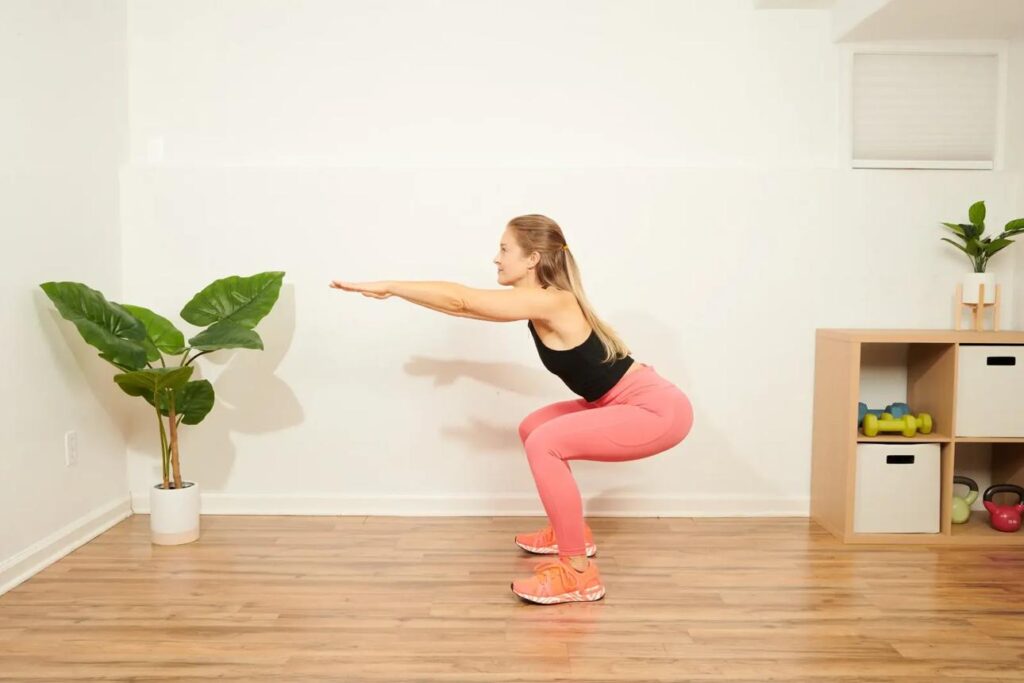
- Squats – 3 sets × 12 reps
- Lunges – 3 sets × 10 reps per leg
- Push-ups (modified or standard) – 3 sets × 8–12 reps
- Glute bridges – 3 sets × 15 reps
- Dumbbell shoulder press – 3 sets × 12 reps
Core Exercises
- Plank – 30–60 seconds
- Bicycle crunches – 15 reps per side
- Leg raises – 12 reps
- Russian twists – 20 reps
Cool-down
- Hamstring stretch
- Quadriceps stretch
- Shoulder stretch
- Child’s pose
- Deep breathing for 5 minutes
Weekly Plan
- Monday: Full-body strength
- Tuesday: Cardio + core
- Wednesday: Lower body
- Thursday: Yoga or stretching
- Friday: Upper body + core
- Saturday: Cardio
- Sunday: Rest or light walking
Tips
- Exercise for 30–60 minutes, 4–5 days each week.
- Stay hydrated.
- Eat a balanced diet with enough protein, fruits, vegetables, and whole grains.
- Sleep 7–9 hours each night.
- Increase workout intensity gradually to reduce the risk of injury.

Healthy Diet Plan for Women
A balanced diet provides energy, supports hormone health, maintains muscle, and promotes overall well-being. Individual needs vary depending on age, activity level, pregnancy, breastfeeding, and health conditions.
Early Morning
- 1 glass of warm water
- Optional: a handful of soaked almonds (5–6)
Breakfast
- Oatmeal with milk and fruit, or
- 2 whole-wheat toasts with eggs or peanut butter, or
- Vegetable poha or upma with yogurt
Mid-Morning Snack
- 1 seasonal fruit (apple, orange, banana, or berries)
- A handful of nuts or seeds
Lunch
- 2 whole-wheat rotis or 1 cup brown rice
- Dal, beans, chicken, fish, tofu, or paneer
- Mixed vegetables
- Salad
- Plain yogurt
Evening Snack
- Green tea or milk
- Roasted chickpeas, sprouts, or fruit
Dinner
- Grilled chicken, fish, tofu, paneer, or lentils
- Steamed or stir-fried vegetables
- 1–2 rotis or a small serving of brown rice
Hydration
- Drink 2–3 liters of water daily.
- Limit sugary drinks.
Foods to Include
- Lean protein: eggs, fish, chicken, lentils, beans, tofu, paneer
- Whole grains: oats, brown rice, whole-wheat roti
- Healthy fats: nuts, seeds, olive oil
- Plenty of fruits and vegetables
- Dairy or fortified alternatives for calcium
Foods to Limit
- Sugary drinks
- Fried and highly processed foods
- Excess sweets
- High-salt packaged snacks
A healthy diet works best when combined with regular physical activity, adequate sleep, and stress management. If a woman is pregnant, breastfeeding, has a medical condition, or has specific goals such as weight loss or muscle gain, her nutritional needs may differ and a personalized plan is recommended.